

The startling reality for most data science teams is that up to 95% of machine learning models never reach production. They stall out, trapped by operational complexity, security hurdles, and persistent deployment friction. This gap between a functioning model and a value-generating asset is where the right MLOps platform becomes your most critical infrastructure investment. Choosing one isn't just about automation; it’s about establishing reliability, enforcing governance, and dramatically shortening the cycle from initial idea to real-world impact.
This guide is designed to be a comprehensive resource, moving beyond surface-level feature lists to provide a deep, comparative analysis of the best MLOps platforms available today. We cut through the marketing noise to deliver a strategic overview that helps you select a toolset aligned with your team’s specific needs, whether you're an indie developer building an MVP or an enterprise team hardening models for production.
Inside, you will find a detailed breakdown of 12 leading solutions, from comprehensive cloud suites like Amazon SageMaker and Vertex AI to specialized tools like Weights & Biases and open-source frameworks like Kubeflow. For each platform, we analyze:
- Key Features & Use Cases: What it does best and who it's for.
- Pros & Cons: An honest assessment of its strengths and limitations.
- Pricing & Integration: Practical considerations for budget and existing tech stacks.
- Scalability & Security: How it handles growth and protects your assets.
We provide screenshots, direct links, and an actionable checklist to simplify your decision-making process. This article serves as your definitive guide to navigating the MLOps maze and ensuring your models successfully make the leap from development to deployment.
1. Vibe Connect
Vibe Connect distinguishes itself from traditional MLOps platforms by merging intelligent automation with elite human expertise. It functions as an AI-powered automation partner, designed to transition machine learning projects from concept to production with exceptional speed and security. The platform's core innovation lies in its dual approach: first, its AI agents perform a deep analysis of your codebase to map technical requirements, identify edge cases, and generate precise development guidelines. This initial step ensures a comprehensive understanding of your project’s unique architecture and operational needs.

Following the AI analysis, Vibe Connect matches your project with its curated network of "Vibe Shippers," senior engineers who have a proven track record of shipping products using your exact technology stack. This combination of AI-driven planning and expert execution directly addresses the most common deployment bottlenecks, making it one of the best MLOps platforms for teams focused on rapid, secure delivery.
Key Features & Use Cases
Vibe Connect's service is structured to manage the entire production lifecycle, allowing product and MLOps teams to focus on model development and user experience rather than operational complexities.
Key Strengths:
- AI-Powered Code Analysis: The platform's agents read your repository to understand dependencies and architecture, creating a clear and actionable roadmap for deployment and scaling.
- Expert Talent Matching: Its primary value is pairing you with engineers who have direct, hands-on experience with your specific stack, eliminating the learning curve and reducing integration risk.
- End-to-End Production Management: Vibe Connect handles everything from staging and production rollouts to autoscaling infrastructure, continuous performance tuning, and observability.
- Integrated Security & Compliance: The service includes rigorous security audits, threat modeling, and implementation of least-privilege access controls, significantly hardening your application before it goes live.
Ideal Use Cases:
- Startups and Indie Builders: Perfect for launching MVPs quickly and securely without hiring a full-time DevOps team.
- Product Teams at SMBs: Augments existing teams by providing on-demand, specialized talent for complex deployments or infrastructure refactors.
- AI/ML Groups: Enables data scientists and ML engineers to productionize models without getting bogged down in infrastructure management and security protocols.
Practical Considerations
Access to Vibe Connect is currently managed through a waitlist, and engagement details, including pricing, are provided upon inquiry. This bespoke model ensures a high-touch, tailored experience but may require a longer evaluation period for teams with strict procurement processes. Organizations will also need to grant codebase and operational access, which could necessitate additional legal or security reviews.
Our Takeaway: Vibe Connect offers a unique and powerful model that solves a critical pain point: bridging the gap between a great idea and a production-ready product. By combining AI-driven architectural analysis with proven human talent, it provides a direct path to faster, more secure, and more reliable MLOps outcomes.
Website: https://vibeconnect.dev
2. Amazon SageMaker (AWS)
Amazon SageMaker is a fully managed, end-to-end MLOps platform deeply integrated into the Amazon Web Services ecosystem. It’s designed for organizations that are already committed to AWS and need a comprehensive suite of tools to build, train, deploy, and monitor machine learning and generative AI models at scale. SageMaker consolidates the entire ML lifecycle into a single console, providing a unified experience from data labeling and feature engineering to model deployment and monitoring.
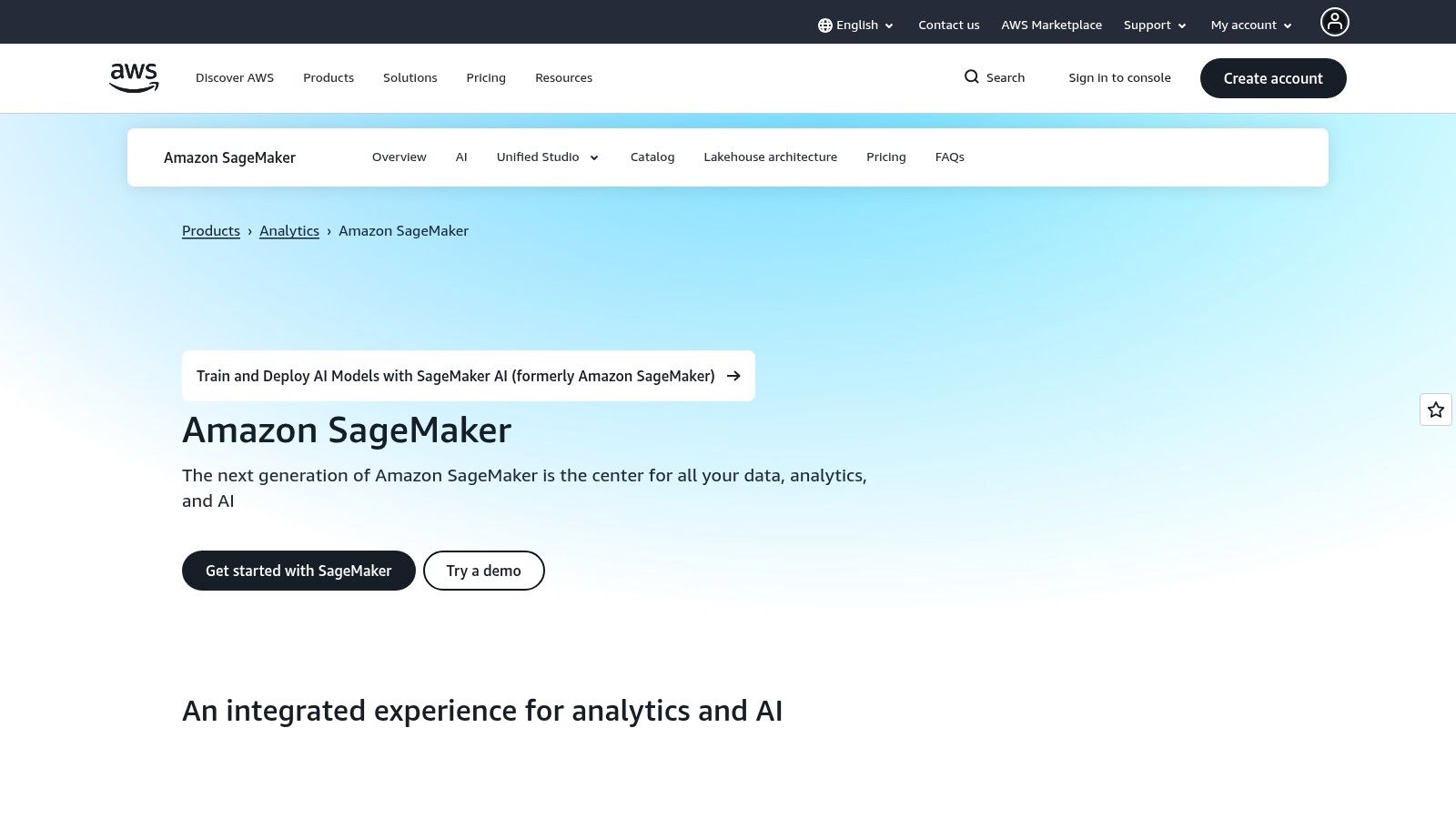
Its key distinction lies in its first-party integrations. By leveraging native connections to services like S3 for data storage, IAM for granular security control, and CloudWatch for monitoring, SageMaker simplifies infrastructure management and enhances reliability. This tight coupling makes it one of the best MLOps platforms for teams seeking enterprise-grade security and compliance without extensive custom configuration.
Key Features & Considerations
- Integrated MLOps Tools: SageMaker Pipelines automates CI/CD workflows, while the Model Registry tracks model versions and artifacts. Model Monitor automatically detects data drift and model quality degradation.
- Cost Management: Pricing is complex, spanning compute instances, storage, and API calls. Effective cost control requires diligent monitoring and leveraging features like Spot Instances for training.
- Ecosystem Lock-in: While powerful, SageMaker is purpose-built for AWS. Its components are not easily portable, making it less suitable for multi-cloud or hybrid strategies.
- Use Case: Ideal for enterprises on AWS needing a secure, scalable, and fully managed solution to streamline their ML workflows and reduce operational overhead.
| Feature | Details |
|---|---|
| Primary Audience | AWS-centric enterprise teams, data scientists, and ML engineers. |
| Deployment Model | Fully managed cloud service within AWS. |
| Key Differentiator | Seamless, first-party integration with the entire AWS service stack. |
| Pricing | Pay-as-you-go across numerous service dimensions; AWS Free Tier available. |
| Website | https://aws.amazon.com/sagemaker |
3. Google Cloud Vertex AI
Google Cloud Vertex AI is a unified machine learning platform that streamlines the development and deployment of both traditional ML and generative AI models. It consolidates the entire MLOps lifecycle, providing a single environment for data preparation, model training, tuning, evaluation, and serving. This integration makes it a strong contender for one of the best MLOps platforms, especially for teams building on the Google Cloud Platform (GCP).
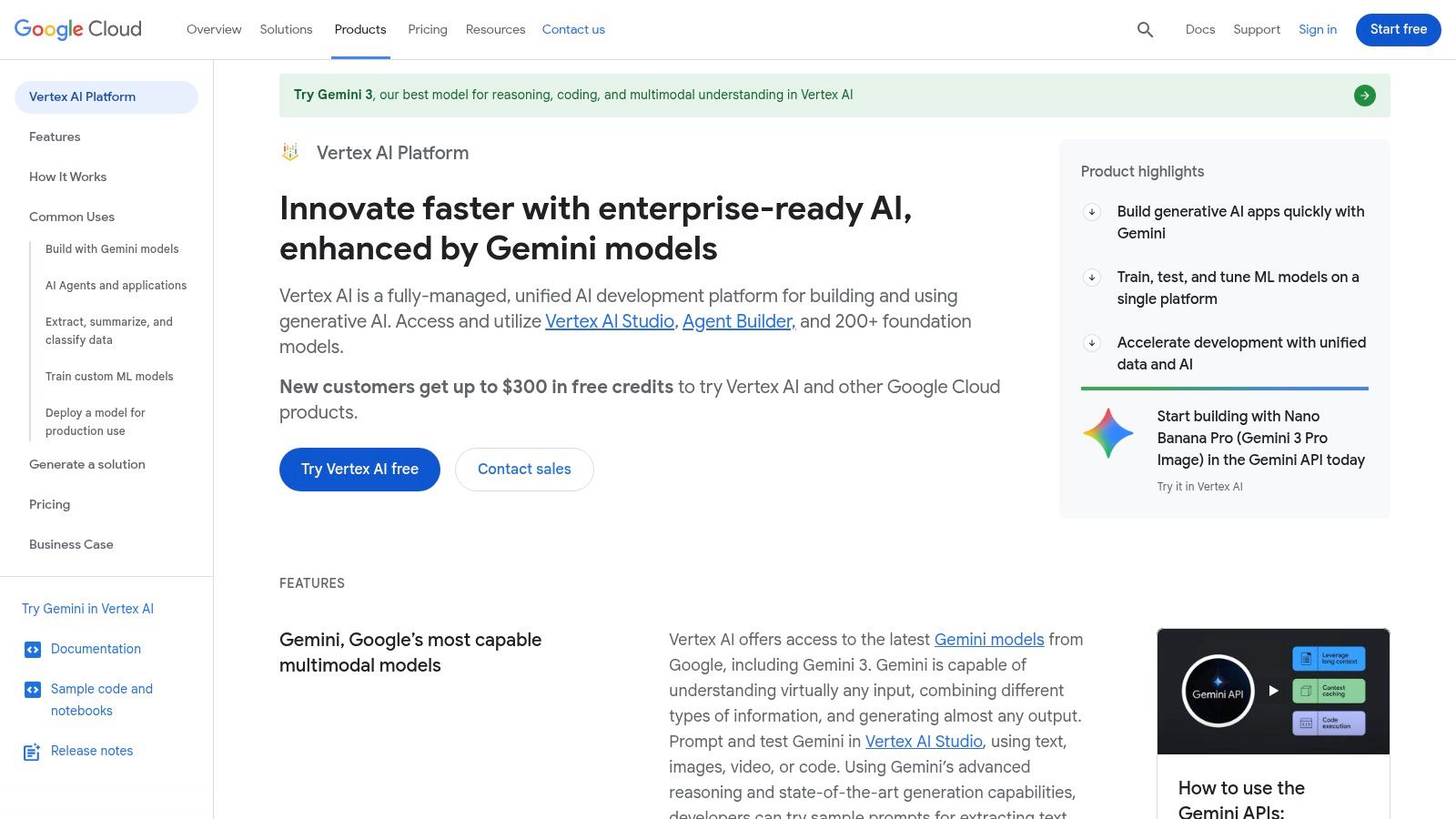
Its primary distinction is its first-class support for Google’s own foundation models, like the Gemini family. Vertex AI provides direct API access and purpose-built tools, such as the Model Garden and Generative AI Studio, for rapid prototyping and tuning. This deep integration simplifies building sophisticated agentic applications and leveraging cutting-edge AI without the complexity of managing underlying infrastructure, a core principle in the evolution of DevOps for machine learning.
Key Features & Considerations
- Unified AI/ML Tooling: Offers a complete suite including a model registry for versioning, Vertex AI Pipelines for workflow automation, and managed online/batch serving for deployments.
- Rapidly Evolving Platform: The feature set changes quickly to incorporate the latest AI advancements. Teams must stay current with updates to leverage its full potential.
- GCP Ecosystem Focus: While incredibly powerful within Google Cloud, its components are not designed for portability, making it best suited for organizations committed to the GCP ecosystem.
- Use Case: Ideal for teams standardized on GCP that need seamless access to Google's foundation models and a fully managed, scalable platform for building and deploying ML and GenAI applications.
| Feature | Details |
|---|---|
| Primary Audience | GCP-centric data science teams, ML engineers, and developers building generative AI applications. |
| Deployment Model | Fully managed cloud service within GCP. |
| Key Differentiator | Tight, first-party integration with Google’s foundation models (e.g., Gemini) and AI tooling. |
| Pricing | Usage-based for runtimes, API calls, and resources; includes a monthly free tier. |
| Website | https://cloud.google.com/vertex-ai |
4. Azure Machine Learning
Azure Machine Learning is Microsoft's enterprise-grade cloud service designed to manage the complete machine learning lifecycle. It offers a comprehensive, integrated environment deeply embedded within the Azure ecosystem, making it a natural choice for organizations already invested in Microsoft technologies. The platform provides a collaborative space for data scientists and MLOps engineers to build, train, deploy, and manage models with built-in governance, security, and compliance.
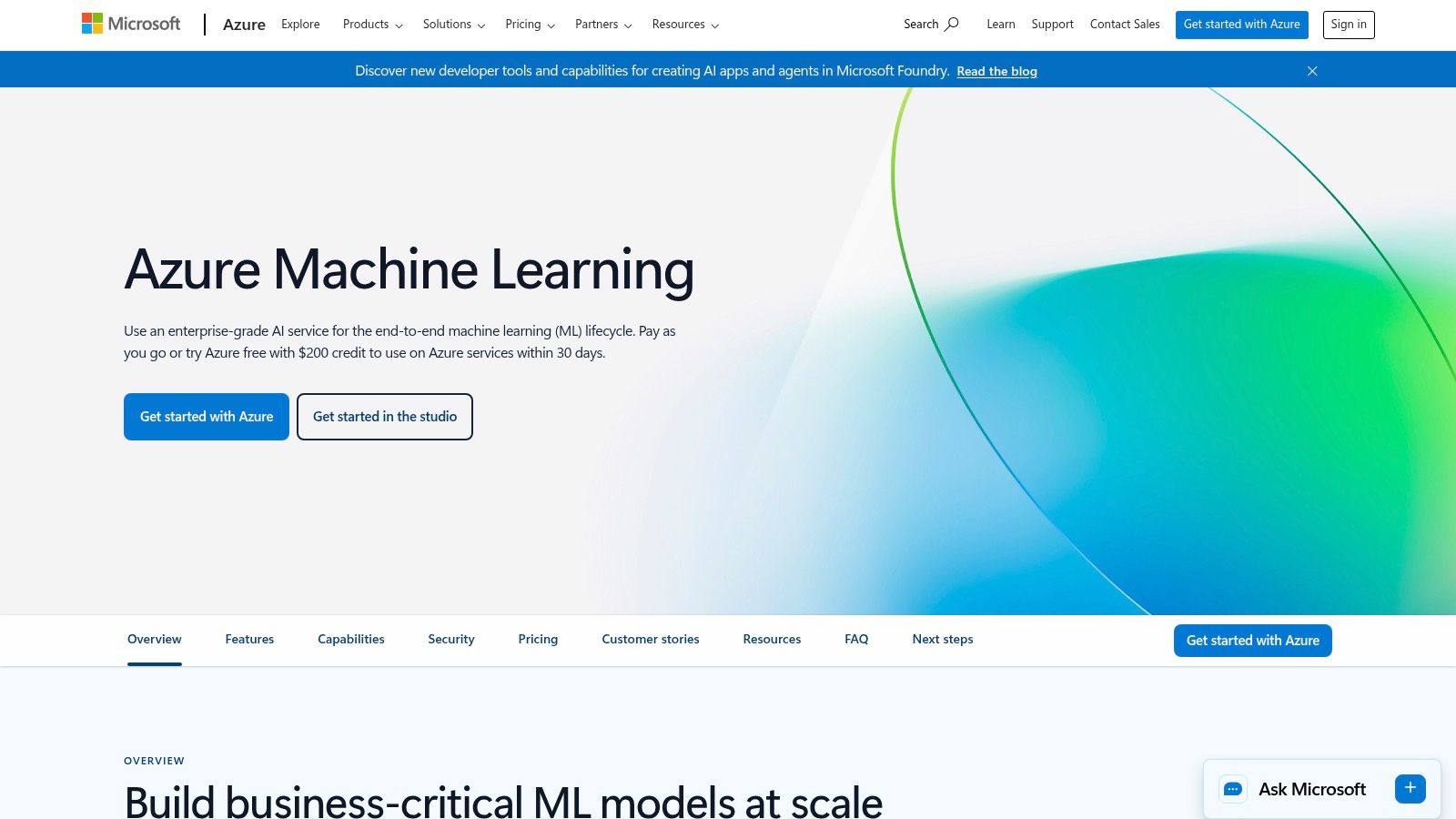
Its core advantage is the seamless integration with other Azure services like Azure DevOps for CI/CD, Azure Blob Storage for data, and Microsoft Entra ID for security. This native connectivity simplifies infrastructure and operational management. For teams needing robust, auditable AI systems, Azure ML is one of the best MLOps platforms available, offering extensive Responsible AI tooling and enterprise-grade SLAs to ensure reliability and trust.
Key Features & Considerations
- End-to-End MLOps: Provides native CI/CD integration, managed endpoints for real-time and batch scoring, a centralized model registry, and a shared feature store.
- Cost Complexity: The platform itself has no additional fee; you pay for the underlying Azure compute and storage resources you consume. Careful resource management is crucial to control costs effectively.
- Ecosystem Integration: Heavily optimized for the Azure cloud. While powerful within its environment, migrating workflows to other clouds can be challenging, creating a degree of vendor lock-in.
- Use Case: Best suited for enterprises standardized on Microsoft Azure that require a secure, scalable MLOps solution with strong governance and responsible AI capabilities.
| Feature | Details |
|---|---|
| Primary Audience | Azure-based enterprise data science teams, MLOps engineers, and IT administrators. |
| Deployment Model | Fully managed cloud service within Microsoft Azure. |
| Key Differentiator | Deep integration with the Azure ecosystem and a strong focus on Responsible AI and enterprise governance. |
| Pricing | Pay-as-you-go for underlying Azure resources (compute, storage); a free tier is available. |
| Website | https://azure.microsoft.com/en-us/products/machine-learning |
5. Databricks (Mosaic AI + MLflow + Unity Catalog)
Databricks offers a lakehouse-native MLOps solution by unifying data and AI workflows on a single platform. It integrates MLflow for experiment tracking, Unity Catalog for governance, and Mosaic AI for model serving, creating a cohesive environment where data lineage is transparent from raw ingestion to model prediction. This approach is designed for organizations that want to eliminate the silos between data engineering and machine learning, ensuring models are built and governed on the same high-quality data used for analytics.
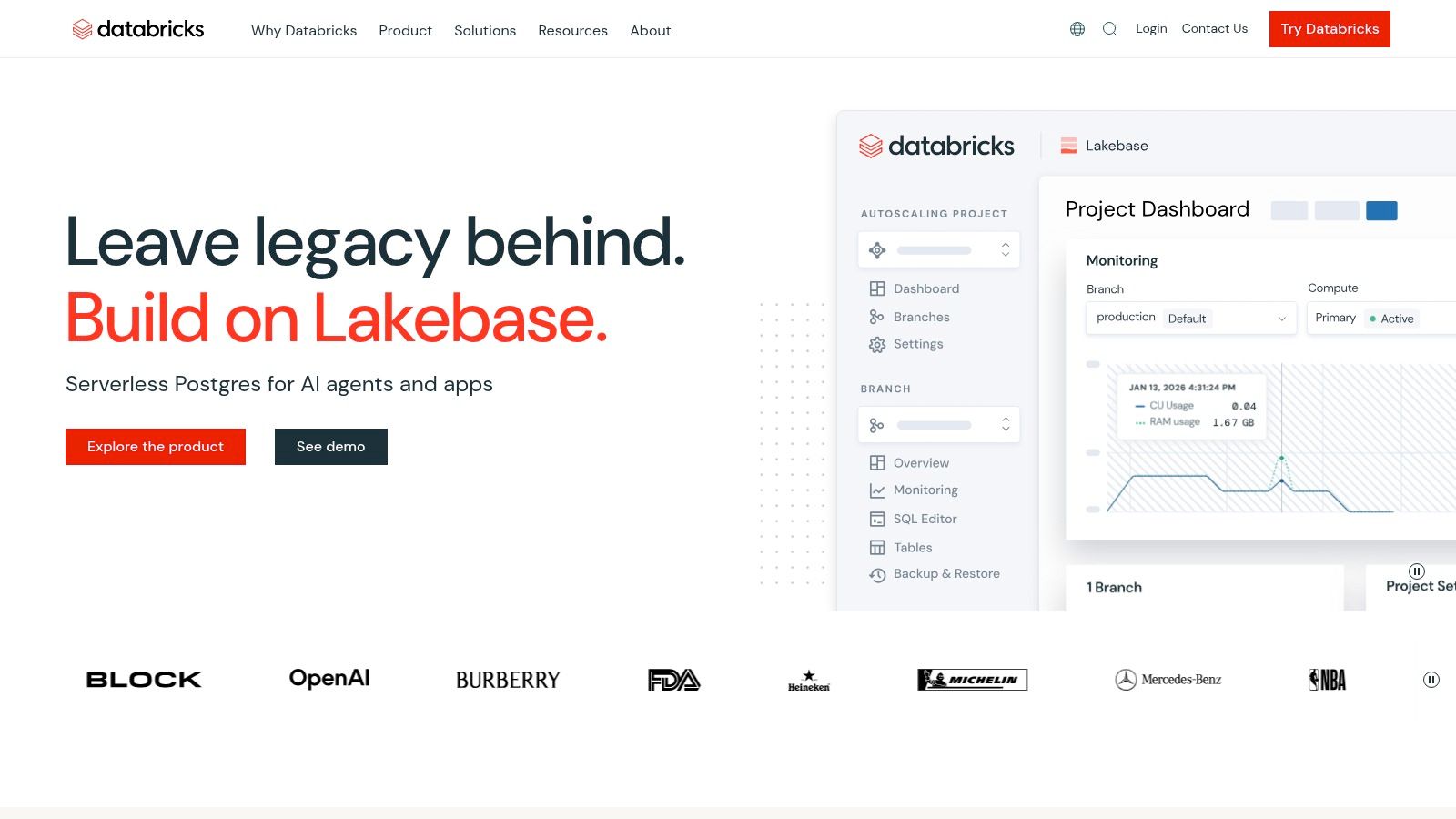
The key distinction for Databricks is its data-centric MLOps philosophy. By using Unity Catalog as a centralized model registry with fine-grained access controls, teams can trace a model's lineage directly back to the specific data tables and features used for its training. This tight integration makes it one of the best MLOps platforms for industries with strict regulatory and compliance requirements, such as finance and healthcare, where auditability and reproducibility are non-negotiable.
Key Features & Considerations
- Unified Governance: Unity Catalog provides a single source of truth for data and models, simplifying security and ensuring consistent governance across the entire lifecycle.
- Integrated Tooling: First-class MLflow integration means no need for separate experiment tracking tools. MLOps Stacks and Asset Bundles provide production-ready templates to accelerate deployment.
- Platform Commitment: The platform delivers maximum value when an organization fully adopts the Databricks lakehouse architecture. Mixing it with external data sources can diminish its core lineage and governance benefits.
- Use Case: Ideal for data-heavy organizations already using Databricks for ETL and data warehousing who want to extend its governance capabilities into their ML and generative AI operations.
| Feature | Details |
|---|---|
| Primary Audience | Data-centric enterprises, ML engineers, and data scientists using the Databricks Lakehouse Platform. |
| Deployment Model | Managed service on AWS, Azure, and GCP. |
| Key Differentiator | Seamless governance and lineage connecting data assets directly to ML models. |
| Pricing | Enterprise-oriented packaging; pay-as-you-go based on Databricks Units (DBUs). Contact sales for details. |
| Website | https://databricks.com |
6. Domino Data Lab
Domino Data Lab is an enterprise MLOps platform engineered for governance, reproducibility, and deployment flexibility across complex organizational environments. It acts as a centralized "system of record" that allows teams to track experiments, manage models, and maintain comprehensive audit trails, making it exceptionally well-suited for regulated industries like finance and healthcare. The platform is built on a Kubernetes-native architecture, providing the agility to deploy on-premises or across any major cloud provider.
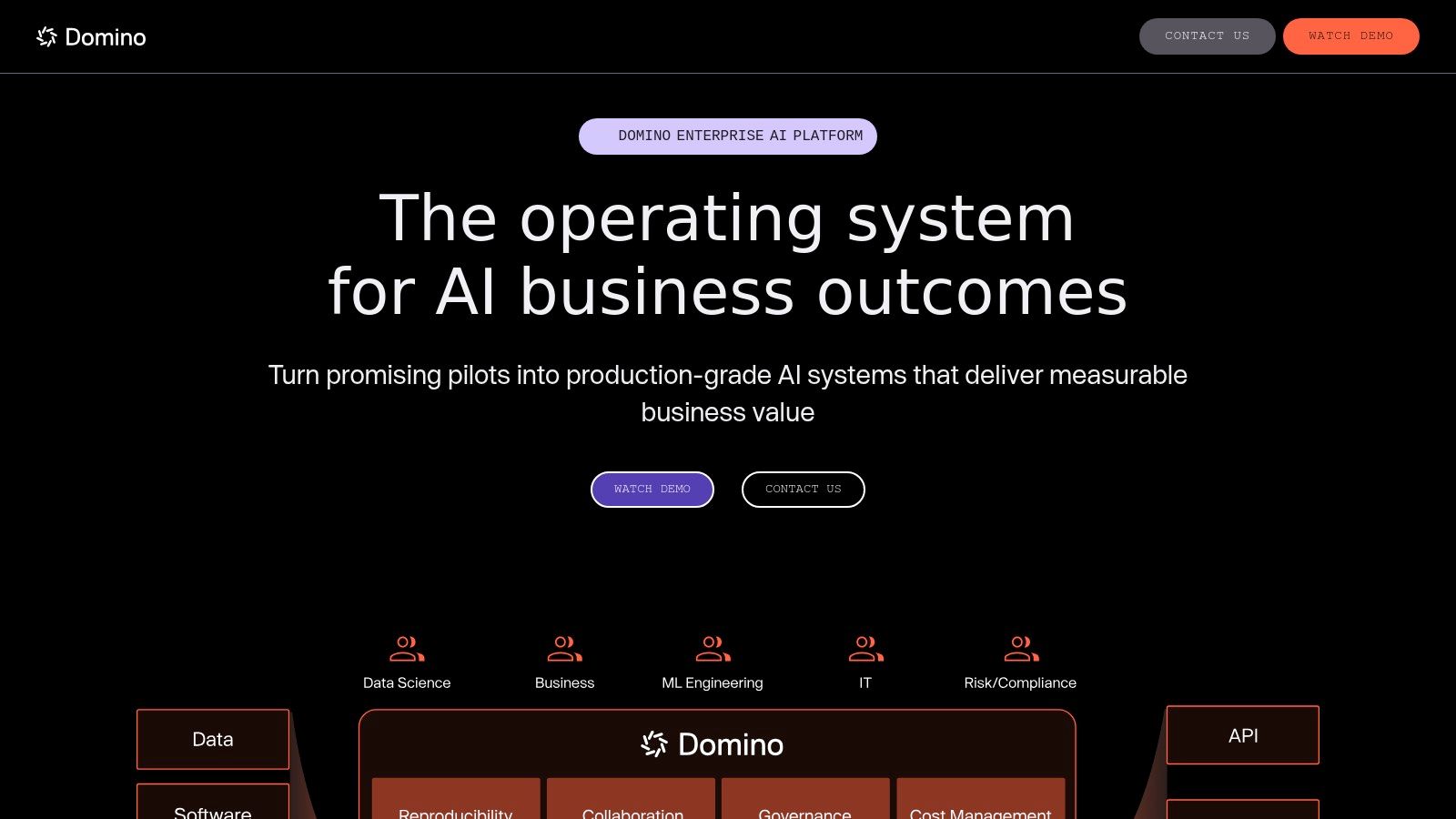
Its primary distinction is its focus on auditability and hybrid-cloud support. Unlike cloud-native MLOps platforms that lock you into a single ecosystem, Domino provides a consistent operational plane regardless of where your data or compute resources reside. This makes it one of the best MLOps platforms for large enterprises that require stringent governance and cannot commit to a single cloud vendor, offering a balance of centralized control and distributed execution.
Key Features & Considerations
- Centralized System of Record: Every artifact, from code and data to model versions and results, is automatically tracked, ensuring full reproducibility and simplifying compliance audits.
- Deployment Flexibility: The platform can be deployed as a self-managed instance in a private cloud or on-premises, or consumed via the fully managed Domino Cloud service.
- Enterprise Focus: Domino is a comprehensive, heavier solution geared toward mid-to-large-scale companies. Its pricing is quote-based, and it requires more initial setup than lightweight SaaS tools.
- Use Case: Ideal for large, security-conscious organizations in regulated sectors needing a reproducible, auditable, and infrastructure-agnostic platform to standardize their data science lifecycle.
| Feature | Details |
|---|---|
| Primary Audience | Enterprise data science teams, ML engineers, and IT leaders in regulated industries. |
| Deployment Model | Self-managed (on-prem, VPC) or as a fully managed cloud service (Domino Cloud). |
| Key Differentiator | Robust governance with full reproducibility and hybrid/multi-cloud deployment flexibility. |
| Pricing | Custom enterprise pricing available via sales consultation. |
| Website | https://domino.ai/product/domino-data-science-platform |
7. DataRobot AI Platform (MLOps/AI Observability)
DataRobot offers a mature, vendor-agnostic MLOps and AI observability platform focused on the critical post-development stages of the machine learning lifecycle. It is engineered for enterprises that require a unified solution for deploying, monitoring, and governing both predictive and generative AI models, regardless of where they were built. The platform provides a centralized hub to manage models from various sources, making it a strong contender for organizations with heterogeneous ML environments.
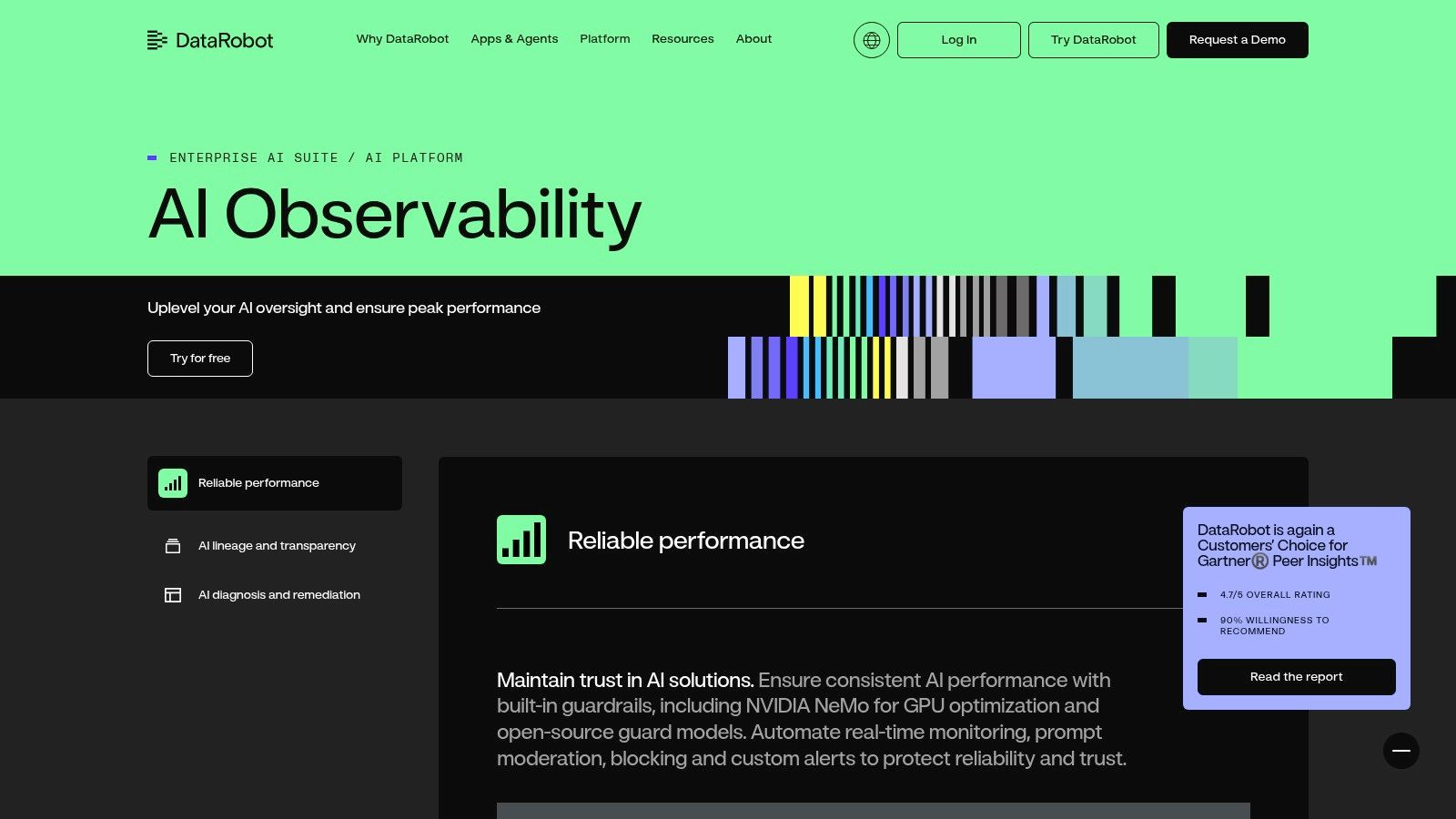
Its primary distinction is its emphasis on comprehensive AI observability and robust governance. DataRobot extends beyond simple performance metrics, offering deep insights into model health, data drift, and operational behavior for both traditional ML and GenAI applications. This makes it one of the best MLOps platforms for regulated industries like finance and healthcare, where auditability, risk management, and bias detection are non-negotiable requirements for production systems.
Key Features & Considerations
- Unified Observability: Provides a central dashboard for monitoring model health, service performance, and data drift. For GenAI, it tracks prompts, LLM costs, and detects issues like toxicity and bias. For more details on this topic, see these machine learning model monitoring tools.
- Vendor-Agnostic Approach: Supports models built in any framework or platform and allows deployment to various targets, preventing ecosystem lock-in.
- Pricing and Flexibility: This is a closed-source, enterprise-grade solution. Pricing is typically available only upon request from their sales team, and it offers less customization than open-source alternatives.
- Use Case: Ideal for large enterprises, especially in regulated sectors, that need a centralized, governable platform to manage and monitor a diverse portfolio of ML and GenAI models in production.
| Feature | Details |
|---|---|
| Primary Audience | Enterprise ML teams, IT operations, and governance, risk, and compliance (GRC) officers. |
| Deployment Model | Managed cloud, on-premises, or hybrid environments. |
| Key Differentiator | Robust, vendor-agnostic AI observability and mature governance features for regulated industries. |
| Pricing | Enterprise-focused; contact sales for a custom quote. |
| Website | https://www.datarobot.com/product/ai-observability/ |
8. Weights & Biases (W&B)
Weights & Biases is a developer-first MLOps platform focused on providing best-in-class tools for experiment tracking, model optimization, and artifact management. Designed for rapid integration, it empowers ML practitioners to meticulously log, visualize, and compare every detail of their training runs, from hyperparameters and metrics to system resource usage. Its core strength lies in its intuitive interface and deep framework integrations, making it a go-to choice for teams prioritizing research velocity and reproducibility.
Unlike comprehensive, all-in-one platforms, W&B excels by focusing on the "build and train" phases of the ML lifecycle. Its distinction comes from its collaborative features, allowing teams to share findings through interactive dashboards and detailed reports. This experiment-centric approach makes it one of the best MLOps platforms for organizations that need to accelerate their R&D cycle and establish a reliable system of record for all modeling efforts.
Key Features & Considerations
- Advanced Experiment Tracking: Logs everything from metrics and model graphs to hardware utilization with just a few lines of code, providing deep insights into model performance.
- Flexible Deployment: Available as a fully managed SaaS solution for quick setup or can be self-hosted (customer-managed) in a private cloud or on-premises for maximum control and security.
- Governance Limitations: While it includes model and dataset registry features, they are less mature than those found in dedicated enterprise platforms. Large-scale governance may require supplementary tools.
- Use Case: Ideal for academic researchers, data science teams, and ML engineers who need a powerful, easy-to-use tool for tracking experiments, visualizing results, and collaborating on model development.
| Feature | Details |
|---|---|
| Primary Audience | Data scientists, ML researchers, and engineers focused on the training and experimentation phase. |
| Deployment Model | Managed SaaS, dedicated cloud, or self-hosted (on-prem/private cloud). |
| Key Differentiator | Developer-first experience with a laser focus on experiment tracking and visualization. |
| Pricing | Tiered pricing with a generous free plan for individuals and paid plans for teams and enterprises. |
| Website | https://wandb.ai/site/pricing |
9. Neptune.ai
Neptune.ai is a highly specialized MLOps platform focused on one thing: experiment tracking and model metadata management. Unlike comprehensive end-to-end solutions, Neptune serves as a dedicated, high-performance metadata store. It is engineered to log, organize, and visualize massive numbers of metrics and artifacts, making it an excellent choice for teams working on large-scale models, including foundation models.
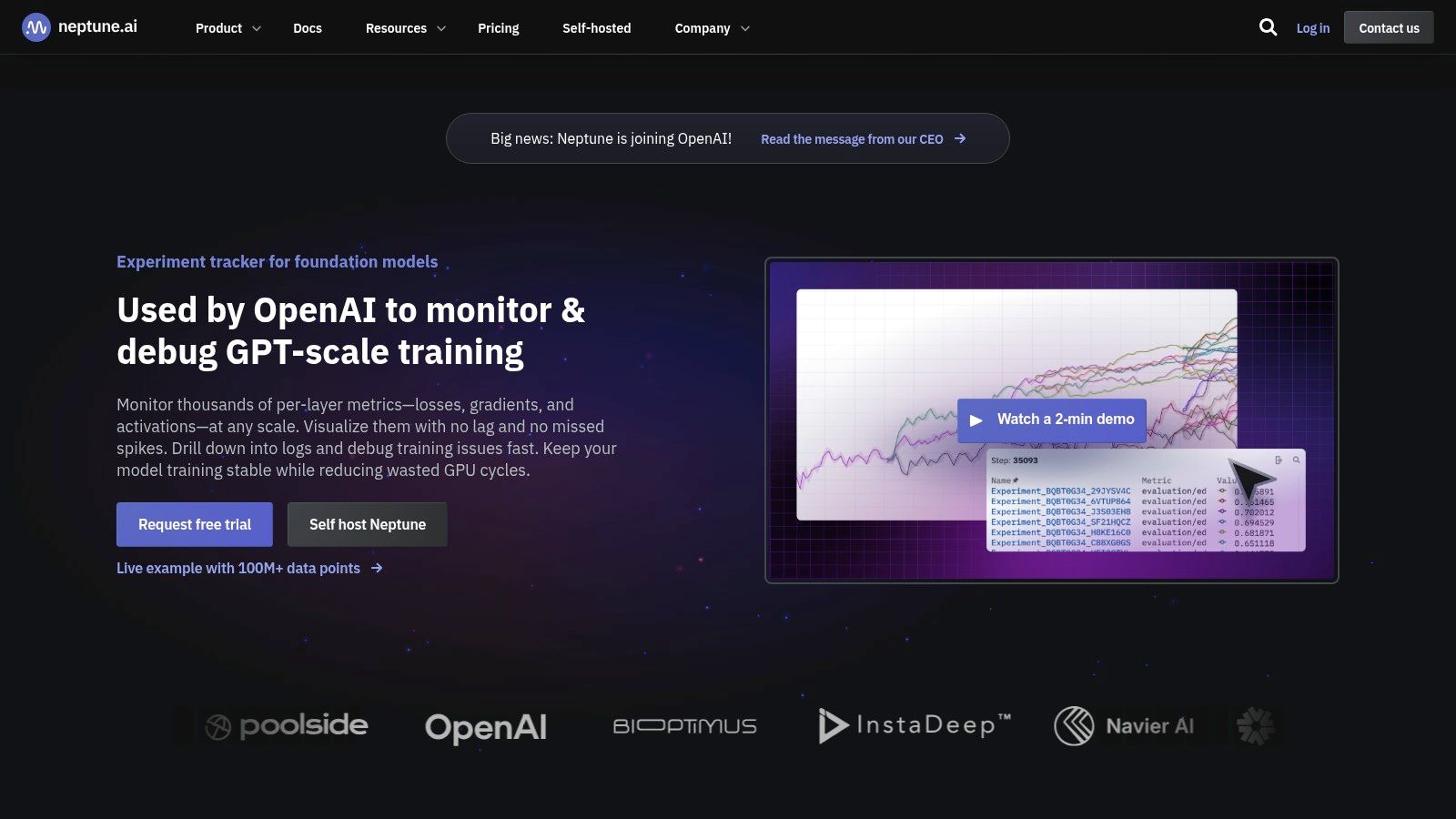
Its key distinction lies in its performance and focus. By concentrating solely on tracking, Neptune provides a near real-time diagnostic and comparison experience that is often faster and more intuitive than the tracking components of larger platforms. This makes it one of the best MLOps platforms for organizations that already have a CI/CD and deployment pipeline but need a robust, scalable system of record for their model development lifecycle.
Key Features & Considerations
- High-Scale Metrics Logging: Purpose-built to handle the extreme volume of metrics generated during large-model training, with a responsive UI for visualization.
- Flexible Deployment: Available as a fully hosted SaaS product or as a self-hosted option using Helm charts for Kubernetes, giving teams control over their infrastructure and data.
- Focused Tooling: Neptune is not a full MLOps stack. It excels at tracking but must be integrated with other tools for orchestration, deployment, and monitoring.
- Use Case: Ideal for research-heavy teams and organizations training large-scale models that need a powerful, dedicated tool to compare experiments and debug training runs in near real-time.
| Feature | Details |
|---|---|
| Primary Audience | Data scientists, ML researchers, and teams training large models. |
| Deployment Model | Hosted SaaS or self-hosted via Kubernetes (Helm). |
| Key Differentiator | Extreme scalability and performance for metadata logging and experiment tracking. |
| Pricing | Based on the volume of data points logged, with generous free and team tiers available. |
| Website | https://neptune.ai/product |
10. Kubeflow (open source)
Kubeflow is an open-source, community-driven MLOps toolkit built to run natively on Kubernetes. It provides a modular and portable framework for composing, deploying, and managing machine learning workflows across diverse infrastructure, including on-premises data centers and any major cloud provider. Its core mission is to make ML operations on Kubernetes simple, scalable, and repeatable, giving teams maximum control over their stack.
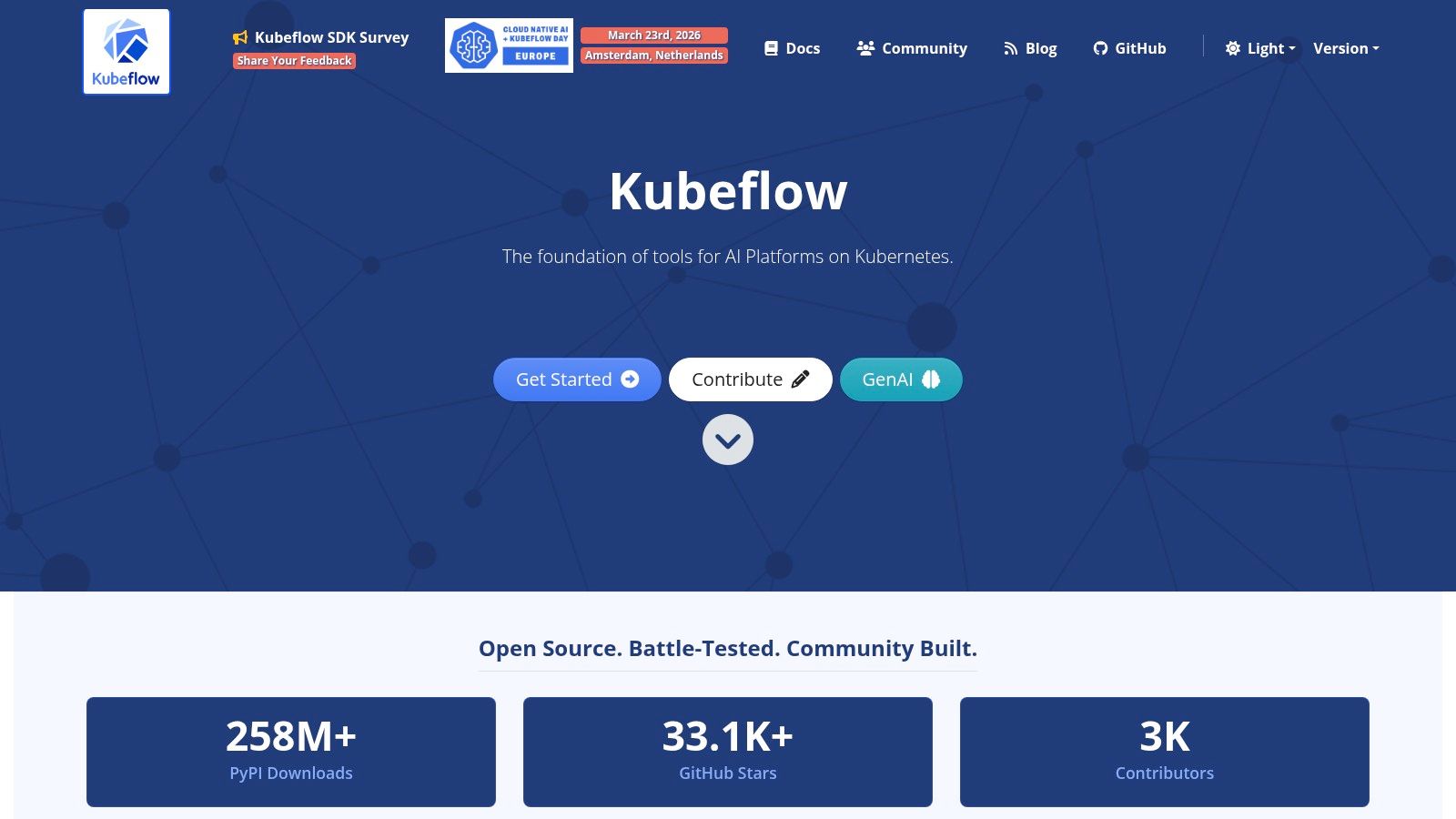
The key distinction of Kubeflow is its cloud-agnostic, open-source nature. Unlike managed services that create ecosystem lock-in, Kubeflow empowers organizations to build a customized MLOps platform tailored to their specific needs without licensing fees. It leverages a vibrant ecosystem of components like KServe for advanced model serving and Katib for hyperparameter tuning, making it one of the best MLOps platforms for teams that prioritize flexibility and long-term portability over the convenience of a fully managed solution.
Key Features & Considerations
- Modular & Composable: Kubeflow consists of distinct components like Kubeflow Pipelines for workflow orchestration and Training Operators for distributed training. Teams can adopt only the parts they need.
- Operational Overhead: While free to use, Kubeflow requires significant Kubernetes expertise to deploy, configure, and maintain. It is not a turnkey solution and demands strong SRE and DevOps capabilities.
- Portability: Built on Kubernetes, workflows developed with Kubeflow can be migrated across any compliant Kubernetes cluster, whether on-premise or in the cloud, with minimal changes.
- Use Case: Ideal for organizations with established Kubernetes infrastructure and SRE teams seeking to build a cost-effective, highly customizable, and vendor-neutral MLOps environment.
| Feature | Details |
|---|---|
| Primary Audience | ML engineers and DevOps teams with strong Kubernetes skills. |
| Deployment Model | Self-hosted on any Kubernetes cluster (on-premises or cloud). |
| Key Differentiator | Kubernetes-native, open-source, and highly portable across different environments. |
| Pricing | Free (open-source software); costs are associated with the underlying infrastructure. |
| Website | https://www.kubeflow.org |
11. MLflow (open source)
MLflow is an open-source platform that has become a ubiquitous standard for managing the machine learning lifecycle. Rather than being an all-in-one managed solution, it provides a set of powerful, modular components for experiment tracking, model packaging, and versioning that can be integrated into any existing stack. This flexibility makes it a foundational building block for teams seeking to create a custom MLOps environment without committing to a single vendor's ecosystem.
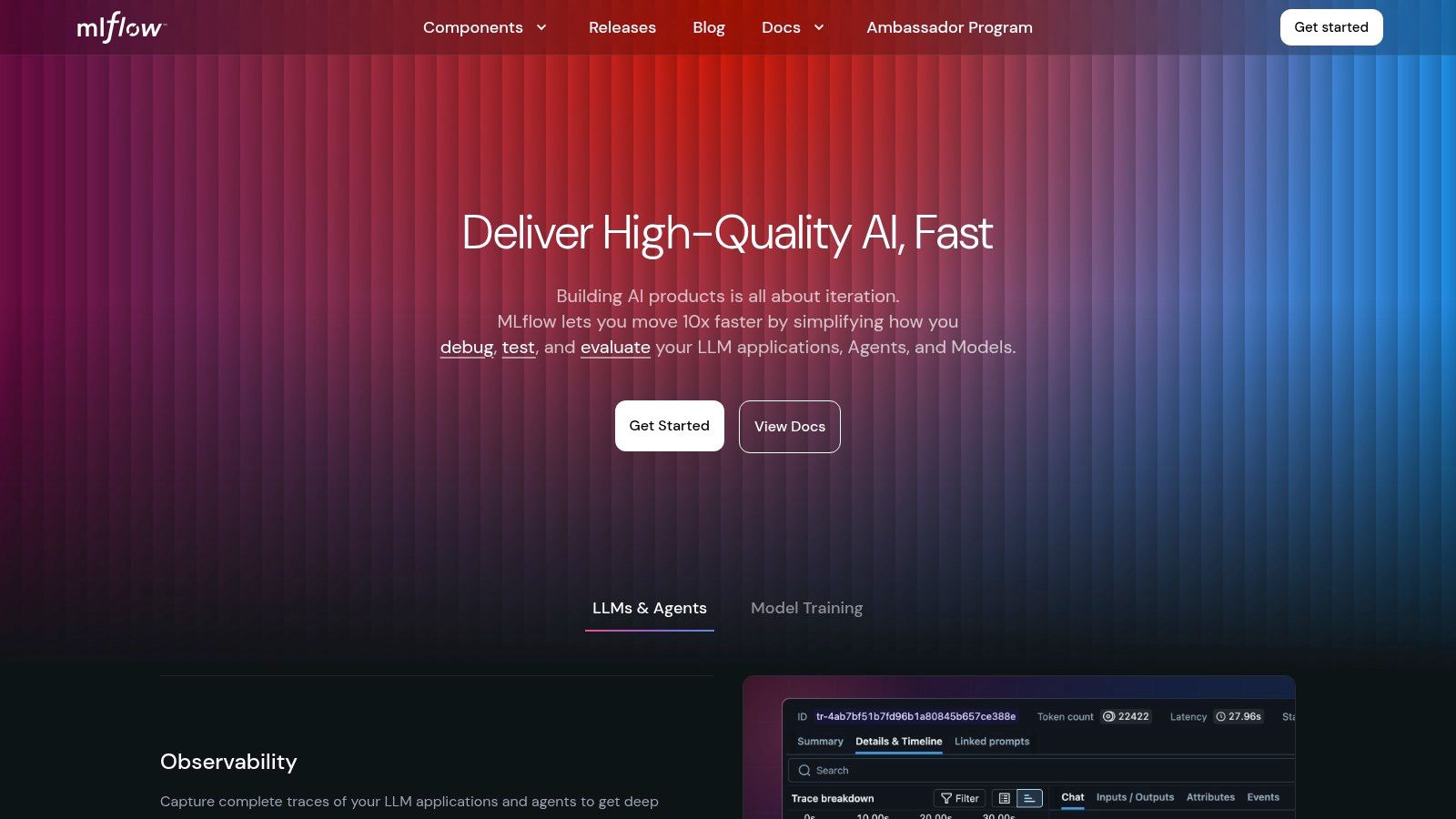
Its core strength lies in providing a consistent, language-agnostic framework that works across any library (TensorFlow, PyTorch, Scikit-learn) and cloud provider. By standardizing experiment logging and model format, MLflow ensures reproducibility and simplifies collaboration among data scientists. This focus on interoperability positions it as one of the best MLOps platforms for organizations prioritizing portability and long-term flexibility in their technology choices.
Key Features & Considerations
- Modular Components: Consists of four primary tools: Tracking (logging parameters and results), Projects (packaging code for reproducibility), Models (a standard format for packaging), and a Model Registry for lifecycle management.
- Self-Managed vs. Hosted: As open-source software, you must run, secure, and maintain the MLflow server yourself. Alternatively, managed versions are available from providers like Databricks, which handle the infrastructure overhead.
- Extensibility: MLflow is not an end-to-end deployment solution on its own. Advanced governance and production serving often require complementary tools for a complete MLOps pipeline.
- Use Case: Ideal for teams wanting a vendor-neutral MLOps foundation. It's perfect for R&D environments needing robust experiment tracking and for organizations building a customized, multi-cloud ML infrastructure.
| Feature | Details |
|---|---|
| Primary Audience | Data scientists, ML engineers, and teams building custom, portable MLOps stacks. |
| Deployment Model | Self-hosted open source or via managed cloud services (e.g., Databricks). |
| Key Differentiator | An open, ubiquitous standard that minimizes vendor lock-in and integrates with hundreds of tools. |
| Pricing | Free to use (open source); costs are associated with the infrastructure it runs on or managed service fees. |
| Website | https://mlflow.org |
12. AWS Marketplace (MLOps solutions hub)
AWS Marketplace serves as a curated digital catalog, not as a standalone platform, but as an MLOps solutions hub. It allows organizations to discover, purchase, and deploy software and services from third-party vendors that run on AWS. For teams evaluating the best MLOps platforms, the Marketplace provides a streamlined procurement channel to compare and acquire vetted solutions, from full-stack platforms to specialized accelerators, all under consolidated AWS billing.
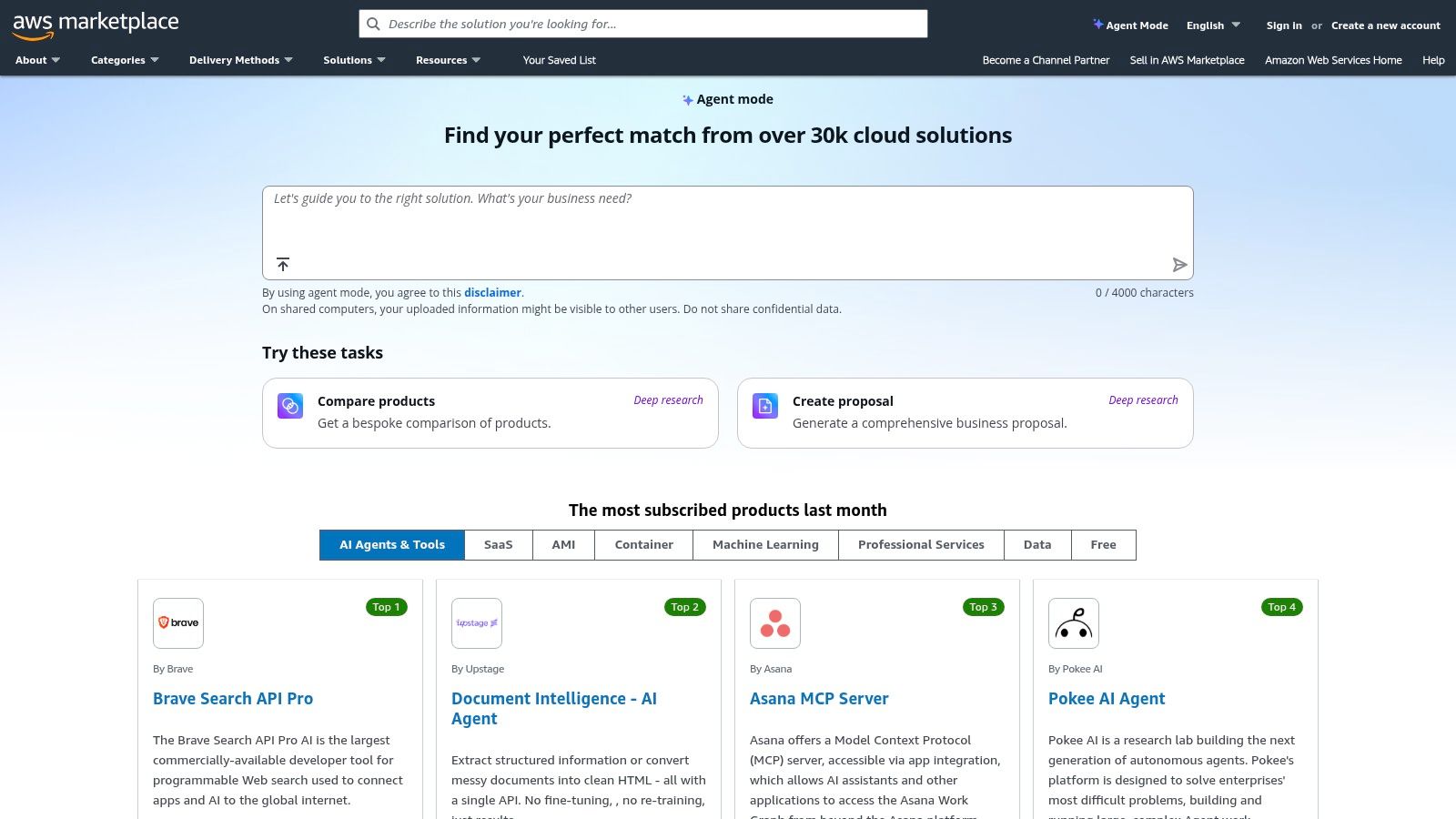
Its key distinction is simplifying procurement and deployment. Instead of negotiating separate contracts, teams can leverage their existing AWS agreement. Many listings include AWS CloudFormation or Terraform templates, which automates setup and adheres to established software deployment best practices. This significantly reduces the time from purchase to production, making it a valuable resource for rapidly implementing new MLOps capabilities.
Key Features & Considerations
- Diverse MLOps Offerings: Provides a central location to find a wide range of MLOps tools, including managed stacks from vendors like Domino Data Lab and professional services for custom implementations.
- Procurement & Governance: Simplifies buying through consolidated AWS billing, private offers, and standardized contracts, which helps with budget management and vendor governance.
- Vendor Lock-in Risk: While it offers choice, the solutions are inherently AWS-centric. Careful due diligence is required, as the quality, support, and scope can vary significantly between sellers.
- Use Case: Ideal for organizations on AWS looking to quickly procure and deploy third-party MLOps tools without the overhead of complex, multi-vendor contract negotiations.
| Feature | Details |
|---|---|
| Primary Audience | AWS-centric enterprise teams, IT procurement managers, and ML engineers. |
| Deployment Model | Varies by vendor; typically deployed into the customer's AWS account. |
| Key Differentiator | Unified procurement, billing, and simplified deployment of third-party MLOps solutions on AWS. |
| Pricing | Varies by vendor; includes free, bring-your-own-license (BYOL), and pay-as-you-go models. |
| Website | https://aws.amazon.com/marketplace |
Top 12 MLOps Platforms Comparison
| Product | Core features ✨ | Key USP ✨ | Quality & Security ★ | Target audience 👥 | Pricing & Value 💰 |
|---|---|---|---|---|---|
| Vibe Connect 🏆 | AI codebase analysis; deployment, autoscaling, observability, security audits | AI‑powered matching to engineers who've shipped your stack ✨🏆 | ★★★★★; rigorous threat modeling & least‑privilege | 👥 Founders, indie builders, product & MLOps teams, agencies | 💰 Waitlist / custom pricing; high ROI (faster time‑to‑impact) |
| Amazon SageMaker (AWS) | Managed training, inference, pipelines, model monitor | End‑to‑end AWS‑native MLOps & JumpStart | ★★★★☆; IAM, VPC, enterprise compliance | 👥 AWS‑centric teams & enterprises | 💰 Usage‑based; cost mgmt required |
| Google Cloud Vertex AI | Studio, Model Garden (Gemini), pipelines, managed serving | Direct access to Google foundation models ✨ | ★★★★☆; clear runtime pricing & GCP controls | 👥 GCP teams & GenAI apps | 💰 Usage‑based; monthly free tier |
| Azure Machine Learning | CI/CD for ML, managed endpoints, Prompt Flow, feature store | Responsible AI tooling + enterprise SLA | ★★★★☆; strong governance & compliance | 👥 Microsoft/Azure‑standardized orgs | 💰 Pay for Azure resources; no extra platform fee |
| Databricks (Mosaic AI + MLflow) | MLflow tracking, Unity Catalog registry, high‑scale serving | Lakehouse lineage + first‑class MLflow integration | ★★★★☆; strong governance & lineage | 👥 Data platform teams & enterprises | 💰 Enterprise packaging; contact sales |
| Domino Data Lab | Experiment system of record, audit trails, hybrid deploy | Compliance‑focused, reproducibility at scale | ★★★★☆; SOC2/ISO/HIPAA posture | 👥 Regulated mid/large enterprises | 💰 Enterprise; sales pricing |
| DataRobot AI Platform | Deployment hub, drift & health monitoring, AI observability | Vendor‑agnostic observability across models & LLMs | ★★★★☆; mature governance & monitoring | 👥 Regulated industries & ops teams | 💰 Enterprise; contact sales |
| Weights & Biases (W&B) | Experiment tracking, artifacts, sweeps, reports | Developer‑first, fast integration ✨ | ★★★☆☆; SaaS + customer‑managed options | 👥 ML engineers, research teams | 💰 Tiered SaaS (free → premium) |
| Neptune.ai | High‑scale metrics logging, near‑real‑time UI, self‑host | Optimized for foundation‑model training metrics | ★★★☆☆; hosted or self‑host options | 👥 Teams training large models | 💰 Data‑point pricing; generous quotas |
| Kubeflow (open source) | Pipelines, Katib, KServe, model registry; K8s native | Portable, no license cost; full control ✨ | ★★★☆☆; depends on K8s/SRE maturity | 👥 SRE/Kubernetes‑savvy teams | 💰 Open‑source (infra costs only) |
| MLflow (open source) | Experiment tracking, model packaging & registry | Ubiquitous standard; minimizes vendor lock‑in | ★★★☆☆; self‑managed security | 👥 Teams seeking portability & standards | 💰 Open‑source; managed options available |
| AWS Marketplace (MLOps hub) | Curated MLOps listings, private offers, deployment templates | Fast procurement + AWS billing/integration | ★★★☆☆; varies by seller | 👥 AWS buyers needing vetted solutions | 💰 Marketplace pricing; seller‑specific |
Making Your Choice: A Framework for Selecting the Right MLOps Platform
Navigating the landscape of MLOps platforms can feel overwhelming. We've explored a wide spectrum of tools, from comprehensive, fully-managed cloud suites to specialized, developer-centric experiment trackers and powerful open-source frameworks. The key takeaway is that the "best MLOps platform" is not a one-size-fits-all answer; it's the one that best aligns with your team's skills, project complexity, budget, and long-term strategic goals.
The decision ultimately hinges on a few critical axes. You have the major cloud providers like Amazon SageMaker, Google Vertex AI, and Azure Machine Learning, which offer deep integration and a unified environment but risk vendor lock-in. Then there are enterprise-grade platforms such as Domino Data Lab and DataRobot, which excel in governance, collaboration, and security for large, regulated organizations.
For teams that prioritize the developer experience and want best-in-class tools for specific stages, platforms like Weights & Biases and Neptune.ai offer unparalleled capabilities in experiment tracking and model registry. Finally, open-source solutions like Kubeflow and MLflow provide maximum flexibility and control, but they demand significant in-house expertise to implement and maintain.
Your Actionable Selection Checklist
As you move from evaluation to decision, use the following framework to guide your internal discussions. This checklist will help you cut through the noise and focus on what truly matters for your organization's success.
Assess Your Team's Current Skillset: Be realistic about your team's expertise. Do you have deep Kubernetes and DevOps knowledge to manage a solution like Kubeflow, or would a fully-managed platform like Vertex AI accelerate your time-to-market? The most powerful tool is useless if your team cannot effectively operate it.
Define Your Portability and Multi-Cloud Needs: Consider your future. Are you committed to a single cloud provider, or do you need a platform-agnostic solution that can run anywhere? Answering this question early will help you avoid costly migration efforts down the road. Tools like MLflow and Domino Data Lab are designed with portability in mind.
Clarify Security and Compliance Requirements: For industries like finance, healthcare, or government, this is non-negotiable. Scrutinize each platform's security posture, data governance features, and compliance certifications (e.g., SOC 2, HIPAA, GDPR). Enterprise platforms often lead in this category, but managed cloud services also offer robust options.
Map Your Entire ML Lifecycle: Don't just solve for today's problem. Think about the complete journey from data ingestion and feature engineering to model monitoring and retraining. Does the platform provide a cohesive solution, or will you need to stitch together multiple disparate tools? A holistic view prevents future integration headaches.
Estimate the Total Cost of Ownership (TCO): Look beyond the sticker price. A "free" open-source tool can become incredibly expensive when you factor in the engineering hours required for setup, maintenance, and scaling. Conversely, a managed platform's subscription fee might be a fraction of the cost of hiring a dedicated MLOps team. Calculate compute costs, licensing fees, and personnel time for a true cost comparison.
Choosing from the best MLOps platforms is a strategic decision that will impact your organization's ability to deliver value with AI for years to come. The right platform acts as a force multiplier, empowering your team to build, deploy, and manage models efficiently and reliably. The wrong choice can lead to technical debt, operational bottlenecks, and frustrated data scientists.
Ultimately, remember that a tool is only one piece of the puzzle. The most successful AI initiatives combine a robust technology stack with deep operational expertise. The goal is to spend less time managing infrastructure and more time creating innovative models that drive business outcomes.
Even with the perfect platform, managing deployment, security, and scaling requires specialized expertise. Vibe Connect bridges this gap by combining a streamlined MLOps platform with on-demand access to a network of elite DevOps and MLOps engineers. If you need not just a tool, but a true operations partner to ensure your ML models get to production and stay there reliably, explore what we offer at Vibe Connect.